The innovation point is the pivotal moment when talented and motivated people seek the opportunity to act on their ideas and dreams. — W. Arthur Porter
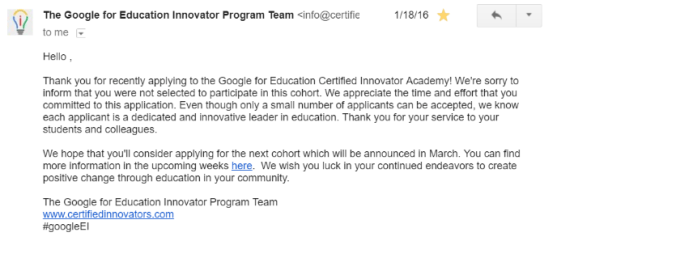
The first time I applied for the Google Innovator Academy, I really thought that I had a good project idea. However, because of medical issues, I could not fully commit to putting together a top-notch application and video. The day applications were due was the day I created my video. I had just been at home on medical leave for 4 weeks and not feeling my best. Needless to say, I was rejected. I was disappointed but not much. I knew what I submitted was not my best work, so I couldn’t really be upset when I received the following email from the Innovator Program Team:
The second time I applied, I loved my idea. I put together a great video and application. I eagerly awaited hearing back from the Innovator Program Team. It wasn’t to be. Again. This time I was more than disappointed. I couldn’t figure out why I was not accepted to be part of the Boulder 16 cohort. I remember watching the Twitter hashtag for the academy, and I was quite jealous. I felt like my time had passed, and I would never be a Google Innovator. I saved the second rejection email. I am not sure why, but I did.
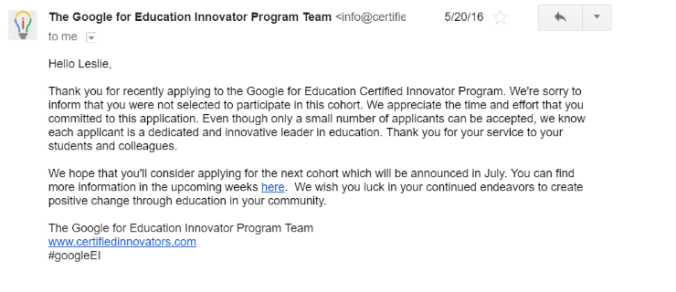
When I was rejected after the second application, I decided that I would take a break from applying. I fundamentally believed that there was something wrong with how I was approaching the entire process, and I needed time to regroup. I also thought that there was something fundamentally wrong with me since I could not put together an application packet that was worthy of being accepted. I would watch the #GoogleEI Twitter feed each time a new cohort was announced. Each time I would see the congratulatory emails from those accepted, I was reminded of my failure. I pretty much decided that I would not apply again. I felt like I could make a difference without the Google Innovator label. Plus, I was tired of getting the email that said, “Sorry, we don’t want you but keep doing what you are doing.” Okay, that’s not what the email said, but that’s how I interpreted the message.
After enough time had passed, and I found other reasons to be proud of my work (I co-authored #Edumatch 16: Snapshot in Education and signed a contract with my publisher to write my next book due next year), I decided that I could try one more time. I am not a quitter, and I could not let myself not try again. This time I didn’t spend hours trying to find a project. I let my project find me. One evening I was online and saw a bus that had been repurposed into a mobile learning center. At that moment, I knew what I had to do for my next Google Innovator application project. I am not the instructional technology coach assigned to the elementary schools in my district, but I do visit them from time to time. I also have an eight year old foster son living with me. He loves to tinker with stuff. There are many days that he will go in his room and make things. He then will ask me to come in and play whatever game he has made up. His games usually involve throwing things and counting things. When my idea hit me, I knew that we needed a mobile STEM lab in our district. Our kids need places they can tinker, create, collaborate, critically think, and communicate with one another. Just like districts around the country, money is an issue. We cannot put STEM labs in every school, but we can have a bus that travels around the district and expose our students to as many opportunities as possible.
From the moment I had the idea to make a mobile STEM lab, I knew that would be the project that I would do regardless of my status as an Innovator. I want it for my foster son and the children in our district. I now know that in my two previous attempts, I was not passionate. I cared, but those projects did not keep me up at night. This project does. This is the project that I want to complete and share with others around the world. This project I want to use to train teachers in using STEM in the classroom. This project will allow me to go from school to school in my district and possibly neighboring districts and watch students be amazed as they create and communicate with students in their classrooms and around the globe. Yes, they will be able to do Google Hangouts while in the bus.
When putting my project application together, I had to do a slide deck explaining the problem, and how I hoped to solve it. To complement the slide deck, I had to create a video and upload it to YouTube. I spent a lot of time on both because I wanted my passion to shine so that those judging the applications could see how important this project is to me. I even went so far as to record my video on a school bus. I felt that atmosphere would add just the right touch. As I completed the various parts of the application, I had trusted friends look over it and give me suggestions. I wanted to make sure that I was not overlooking anything. The most consistent feedback that I got was to make sure that my project was scalable meaning I needed to make sure that the mobile STEM lab idea is something that can be replicated by others. Sounds easy enough. Right? I tweaked the application and submitted it. I will go ahead and tell you that I am not a patient person. Initially applicants were told that acceptance letters would be sent out on June 4, 2017. Somewhere along the way, the date got changed to June 6th. I was tortured every moment of every day as I waited to see if I had finally been accepted to be a Google Innovator.
I began checking my email at 12:01 AM on June 6th. I checked, rechecked, and checked again. All day long. I watched the Twitter feed. I checked my SPAM folder. I had two training sessions on Google Classroom. My mind was half on the training and half on my email. Still no answer by the end of the work day. My church had Vacation Bible School that week, and I had registered my foster son and my nephew. Let me apologize to God for what I am about to say. I have no idea what transpired that evening during VBS. I was checking email. At exactly 8:00 PM, my pastor was praying. I did not have my eyes closed nor was I paying him any attention. I was scanning my email and saw one from The Google for Education Innovator Program. Before I clicked on the message, I saw, “Congratulations from the Google for Education Innovator Program Team.” Although my pastor was praying, my church is not one that is okay with folks screaming out during the prayers. I had to refrain. I opened the email and saw what I had been wanting to see for so long:
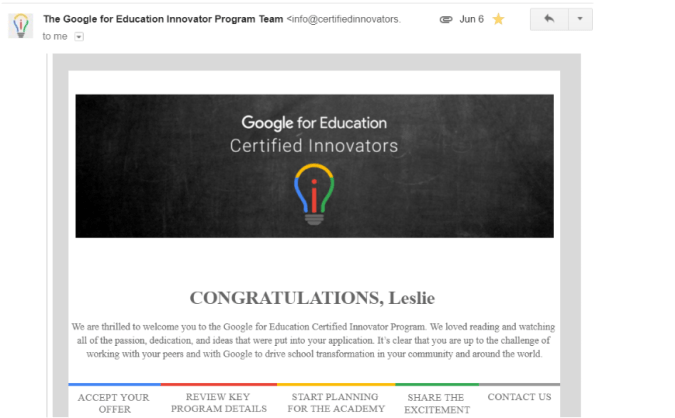
I made it! Finally. I was going to be an Innovator. I, Leslie R. Fagin, was going to Washington, DC, with 36 other phenomenal educators. The #WDC17 cohort would be tasked with something similar to our predecessors – be different, be creative, be innovative, be the driving force behind change in our educational system and our communities and our world.
Of course, being selected to attend the Innovator Academy is not the end of my journey. It’s just the beginning. Since my intention is to share the process with others so they can replicate it in their districts, I will blog on this site and add videos on my YouTube Channel. Not long after our acceptance letters were sent out, we received a ton of information about what to expect as well as things that we needed to do prior to our arrival in DC. I will continue to share my experience as I travel the road to becoming a Google Innovator. I can’t wait until I get to the Google Office in DC, nor can I wait to see the bus in motion sometime in 2018. I already have a name for it, and I can’t wait to unveil it at the press conference. Yes, there will be a press conference.
Stay tuned…

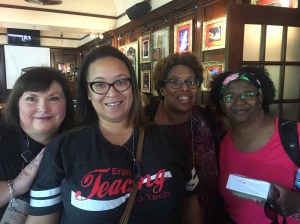 t you do at your job. Ask them what they do. I know it’s hard, but it will be so worth it. I promise you will be glad you did. People talk about the power of the PLN. It’s real. It’s as real as you and me. My go to PLNs are #Edumatch and #ETCoaches. My involvement with Edumatch resulted in my becoming a published author. I did not know any of my fellow authors before I got connected with Edumatch. Now I have a global group of friends that I can go to with any question and get an immediate answer. Working with the ISTE Ed Tech Coaches has given me a group of fellow coaches who constantly push me to do better and be better. We all need someone in our corner who will help bring out the best in us. Having a PLN will help you be better at whatever you are doing. I promise.
 know that not all students are able to explore our country or the world right now, so to me, being able to use Google Expeditions is a way to expose them to as many experiences as possible so that maybe, just maybe a spark will be lit and later in life they will take off on grand adventures and do great things.
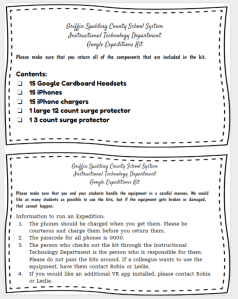 answer as to the suitability of an iPod Touch, we made the decision to utilize iPhones. In our district, all building administrators and central office administrators are issued iPhones. Some were eligible for an upgrade, so we upgraded them and retrieved their old phones. Once the phones were reset to factory condition, my colleague
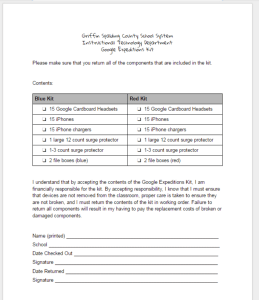
 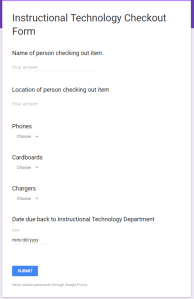 headsets – they are numbered, two power strips, and charging cables. There is also a checklist in the box indicating the contents of each box. Robin created a Google Form that we use to keep up with the location of the boxes. Once the boxes were finished, they were ready to be put in use.
 teachers are asked to complete a short Google Form to reflect on the experience and also to give us feedback or suggestions. We are also working on creating a list of available expeditions for the teachers to use. As we make plans for next school year, we will offer additional trainings for the teachers. We want to make sure that they know how to successfully lead an expedition and seeing it from the student’s perspective will help tremendously.
 There are times that I think that I am stuck in a time warp. Although I find myself thinking about what the future holds, I spend a lot of time thinking about what has happened in the past. I guess one could say that I like to reflect on where I’ve been and where I’m going. I suppose that’s true. As we wrap up another school year and my third year as an instructional technology coach, I have a lot to reflect upon.
 been a fan of the New York Yankees ever since. I only played baseball for one year. The next year, girls were not allowed to play baseball. I made the All Star Team, and there were many dads who had issue with the fact that their sons lost their spots to girls. I played softball from that point on and did well. I always made the All Star Team each year I played. When it wasn’t ball season, I played baseball with the other kids in the neighborhood. We played during the summer, in the fall, after school, and even in the evenings when our dads got home from work. Baseball was my life. I collected baseball cards and spent many nights watching the Yankees on TV. I thought I knew everything there was to know about baseball. In reality, I knew very little. I knew about the game, but I didn’t know the game.
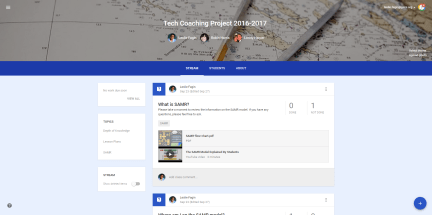 resources in it. I also included a short video on SAMR, a graphic with a variety of Google Google Tools that can be used in her class, and several questions for her to answer to get her to start reflecting on her practice of integrating technology. Google Classroom is going to be the method that we use to house resources and communicate with one another. One of the resources I shared with her was a self assessment on SAMR. Right now, she is saying that most of her tech integration falls within the augmentation stage. Our goal is to get her to more of the modification activities.
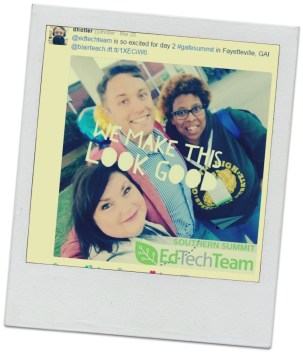 Actually, it quickly became us. Who could resist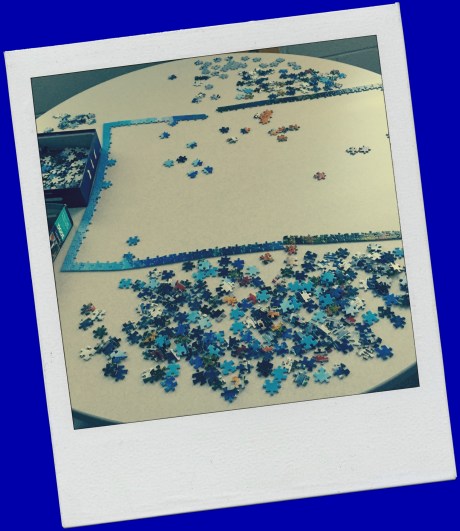
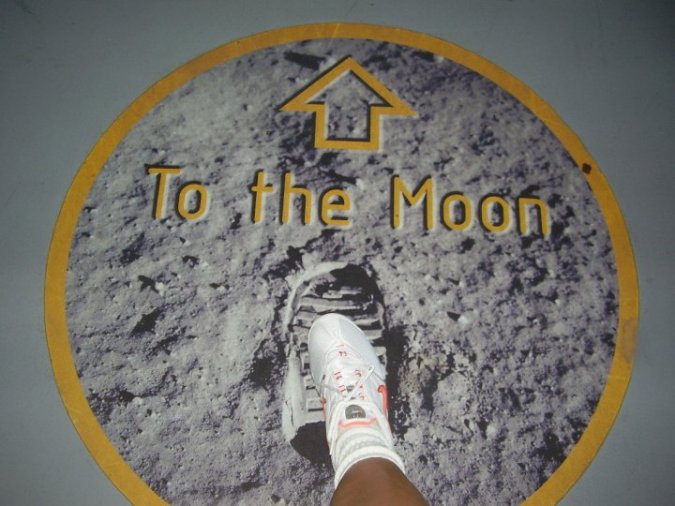
 I recently visited with high school classmates I had not seen since we graduated. I graduated in 1987. There is really not a good reason to not see friends. I plan to make more time to be with my friends. Spending time with friends and even strangers is a gift.
 Everybody has a talent. Many will say they don’t have a talent, but they do. Sometimes we just have a hard time identifying what our talent(s) may be. I love to organize and volunteer. If I am not volunteering, I feel lost. Right now, there are three organizations that are receiving my talents – the University of West Georgia Alumni Association, the Flint River Council Boy Scouts of America, and the American Red Cross. Each organization is dear to me for different reasons, and I feel strongly about giving back. I can’t write big checks, but I can give my time and my talents. Once my recovery is complete, I will jump back into my role as a volunteer. I have missed the connections I made with the people I’ve met.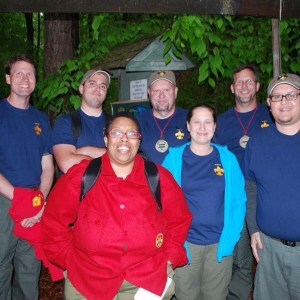

 Diary of a Not-So-Mad Instructional Tech Coach